
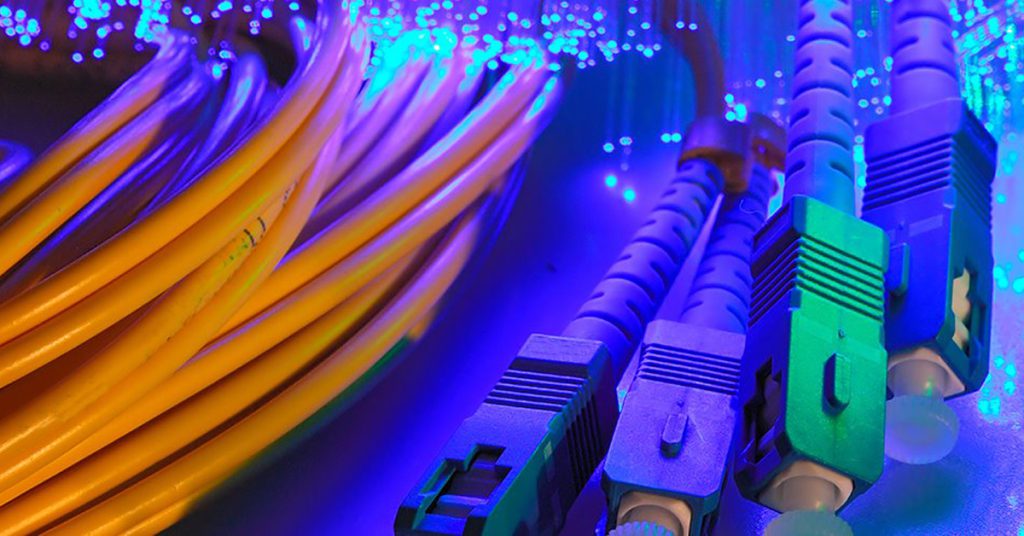
In the digital age, where data transmission speed and reliability are paramount, fiber optics technology has become a critical backbone of modern communication networks. As businesses demand more bandwidth and greater reliability, fiber optics continues to replace traditional copper cabling in key parts of the network.
To understand where fiber fits within an overall infrastructure strategy, see our Comprehensive Guide to Network Cabling.
What Are Fiber Optics?
Fiber optics, or optical fibers, are thin strands of glass or plastic roughly the width of a human hair. These fibers transmit data as pulses of light rather than electrical signals.
This process relies on total internal reflection, allowing light to travel long distances with minimal signal loss. Because fiber carries light instead of electricity, it avoids many of the limitations that affect copper cabling.
The Advantages of Fiber Optics in Networking
The shift from copper to fiber optics brings several key benefits:
• High-speed data transmission for multi-gigabit networks
• Greater bandwidth for cloud services and modern applications
• Long-distance transmission without significant signal loss
• Immunity to electromagnetic interference
• Improved durability and electrical safety
These advantages make fiber especially valuable for network backbones and high-traffic environments.
Applications of Fiber Optics in Networking
Fiber plays a central role across many industries and environments, including:
• Internet and telecommunications infrastructure
• Data centers
• High-definition video delivery systems
• Commercial building backbones
• Building-to-building connectivity
In commercial environments, fiber often connects network closets, buildings, and high-capacity systems. We cover these practical deployments in Understanding Fiber Optic Cabling in Commercial Buildings.
Fiber Optics as Part of Structured Cabling
Fiber rarely exists alone. In most business environments, it works alongside copper cabling within a structured infrastructure design.
This hybrid approach supports data, voice, security, and wireless systems while maintaining scalability. For a plain-language explanation of structured infrastructure, see A Business Owner’s Guide to Structured Cabling (No Tech Jargon).
Future Trends in Fiber Networking
Fiber technology continues evolving. Emerging developments include:
• Multi-core fiber technology
• Advanced optical materials
• Increased support for 5G backhaul
• Higher capacity backbone networks
As bandwidth demands increase, fiber will remain foundational to reliable, high-speed connectivity.
Why Installation Quality Matters
Fiber offers exceptional performance but requires precise installation. Improper handling, tight bends, or poor termination can significantly impact reliability.
Professional installation ensures proper handling, certification testing, and documentation. We explain why installation quality matters across all infrastructure systems in Why Professional Network Installation Matters for Small Businesses.
Planning a Fiber Installation
If you’re planning backbone upgrades, building-to-building fiber links, or new commercial network infrastructure, visit our fiber optic cabling services page to learn how Cabling Wizards designs, installs, tests, and documents fiber networks.